Thursday, August 16, 2012

Taking Off in Silence

It's been a trying week, what with trying to come up with the syllabi for the new academic year and helping my mother out with her sprained ankle. Today I found myself staring longingly at this picture that's making the rounds on the Internet:


Supposedly, it's a view of the Mars skyline, showing Earth, Jupiter, and Venus. Of course, it's some kind of hoax, and if you care for the full explanation, Phil Plait provides it at Discover Magazine.

My interest in the picture is different. I wondered if Malibu Barbie liked the view, for one thing. In my poem, "Malibu Barbie Moves to Mars," I envisioned a tired Malibu Barbie escaping to the red planet where she can, at least, have some peace. It was kind of a reverse ekphrastic experience, staring at this photo and thinking about a poem I had already written.

The sense of peace I got from staring at Earth, so far away, was welcome. I had just spent an uncomfortable two hours at a simple routine visit to my mother's cardiologist, in which I had to listen to the same twenty-second piece of Muzak over and over. The ubiquitous large-screen was just finishing some abominable David Copperfield DVD when we got there, and when it finished it went to the menu screen and just stayed there. No one bothered to restart it or play something else, or just turn the damned thing off. Of course, there are no buttons to push on the waiting room side--some secret remote from within the inner office was asleep on the job.

I was quietly losing my mind. I had brought a book, but the waiting room is small and so even in the farthest corner from the screen, you can still hear it loudly. Every time the music started over, I lost my concentration. I tried switching to a magazine, but that didn't work. Finally, I went up to the window, rang the bell, and asked the woman in the inner sanctorum to please do something about the DVD. The other patients waiting and I had a good round of jokes about Gitmo during the few blessed minutes of silence after David Copperfield disappeared, and then the Keeper of the Remote started the Cirque du Soleil DVD I had already seen last year.

The whole thing was surreal. Not so much David Copperfield's gargantuan head or the contorting Canadians, but this mad insistence on the need to be staring at a screen at all times. I do understand that some people welcome it; at my mother's GP, he's constantly offering the local Spanish soap operas. Given that something like ninety-five percent of his patients would be watching these at home anyway, I can sort of understand how it helps to pass the time. Other places show the news, or play music. I can even understand that magic and circus acts fall under the "general interest" category. What I can't understand is how this has become so necessary that no one seems to be able to envision the possibility of existing for a few breaths without it.

I wouldn't dream of showing up to a doctor's office without a book. Unlike a television, only I can hear my book. I'm not subjecting anyone else to my efforts at entertainment. Not a big reader? A newspaper or magazine can offer some light, quiet entertainment for a little while. Illiterate? Wrong language? Look at the pictures. Out the window. Lie back and think of England, but don't force me to participate in your loud, obnoxious psychic void.

I don't care if the Mars skyline is fake. Whoever came up with it had the imagination to do so, and I thank her or him for it, for the few minutes of quiet fancy flight it offered me. There are many arguments for reading instead of watching television, and normally I couldn't care less. Whatever you believe the merits of each is, there is one extremely valuable way in which reading trumps watching: it's quiet. I can't reproduce the entirety of Ogden Nash's "Take Off with Books" here because it's apparently somehow still under copyright, but let me remind you of a few lines of advice to be found there: "Take off with books, not with the rocket's roar; take off in silence and in fancy soar . . . . Books reached the moon before real rockets did."

Tuesday, August 7, 2012

An Ekphrastic Gem


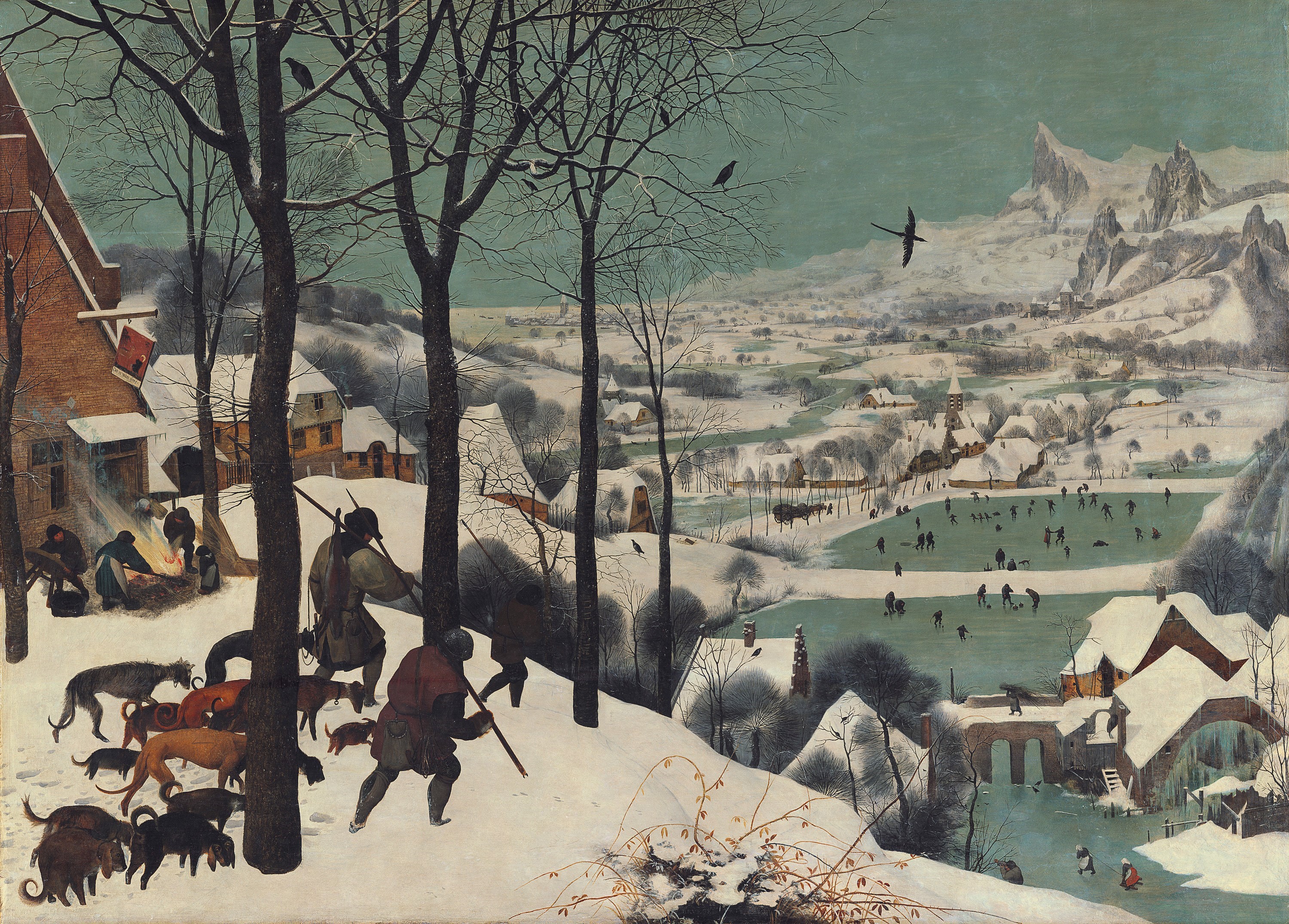
Beautiful ekphrastic poem this week at Linebreak based on the Pieter Bruegel painting above, The Hunters in the Snow. Read "Bruegel" by Paul Carroll and listen to the reading by Ty Kessinger here.

Wednesday, August 1, 2012

The Poets & Writers Best Books for Writers List

Before you buy all 79 books, maybe I can help!


Have been out of commission for a while, having some fun with my uncle and then nursing my mother through a sprained ankle. I’m thinking of a “what I did on my summer vacation” type post later, but I thought I’d get the blog rolling again by posting about Poets & Writers intriguing “BestBooks for Writers” list. I saw some old favorites on it, some I’ve not read but would like to, and a couple of glaring omissions. I thought I’d share my reactions with you, dear reader.

YE OLDE FAVORITES

Graywolf Press’s “The Art of” Series

There were many selections on this list from Graywolf Press’s excellent “The Art of” series, including my very favoritest, The Art of the Poetic Line  by James Longenbach (2007). I’ve talked about this book many times before, because it changed the way I think about lineation forever. Unlike other treatments of what one might consider an “esoteric” subject, Longenbach’s writing is clear and his logic easy to grasp. The examples are perfect. This is my second-favorite writing book of all time, and my No. 1 favorite book on poetry. You don’t know a thing about lineation until you’ve read this book. Another selection from “The Art of” series is Charles Baxter’s The Art of Subtext: Beyond Plot (2007), but I found this one rather hard to get through. Unlike Longenbach, Baxter assumes a very well-read, semi-professional (at least) reader, so at some point one wonders whether such a reader wouldn’t be apt enough already to grasp the subtleties of subplots.

This is indeed a classic, one I first read as an undergraduate. Every poet knows this book, owns a copy, loves it so much that she will go into a burning building to retrieve it. This book is psychology as much as mechanics. Hugo writes about words, but also about the writer’s mind, in beautiful prose of his own. A must-read indeed.


This is another one of my go-to recommendations, and I’ve even used it a couple of times as a textbook. Do not assume that this is a guide for genre writersKing’s advice here is solid for all types of writers. I also love that it’s part writing memoir, part writing instruction. The memoir is of interest even to those who are not King fans (those three sad people), and it’s an eye-opener to the beginning writer who assumes the road to bestsellerdom is paved with sex, drugs, and fancy typewriters. King writes about his early struggles candidly and with humility and humor. I’m not his biggest fan, but I was charmed from page one. The “to-do” section stands alone and has great advice on all the basics: plotting, characterization, even sentence-level editing.

Put this next to The Triggering Town, so you won’t have to scramble during the fire. True, you can find a lot of this info on Wikipedia now, but no one is going to present it to you in a way that makes sense the way Turco does. This is the definitive book on form. You cannot call yourself a poet if you don’t have a well-worn copy of this book.


TO PUT ON MY TO-READ LIST

I’ve been looking for a decent book I could use to teach scene creation for a while, and read some real duds along the away. According to P&W, this book is “straightforward,” which is exactly what I’d like to get.


Despite having spent so much time in school and having read so much all my life, despite all the degrees I’ve accumulated, I still think I’m (gulp!) woefully ignorant. Here is an important writer on important books promising to enlighten me. From P&W: “Originally published in 1934, Pound's book serves as a guide for those interested in honing their critical thinking through reading the classics. The book is based on the premise that to be a good writer one must be a good reader, aware of the traditions out of which the best literature has emerged.” Who can disagree with that?

I’m intrigued by the title of David Orr’s book, Beautiful and Pointless: A Guide to Modern Poetry (HarperCollins, 2011). From P&W: “Award-winning poetry critic David Orr provides a tour and guide to contemporary poetry and the ways in which to appreciate it. Beautiful & Pointless examines what poets and poetry readers talk about when they discuss poetry, such as why poetry seems especially personal and what it means to write ‘in form.’”


Mark Doty wrote an “Art of” book and I didn’t know about it? About description, which is, like, his unbelievable forté? What is the matter with me? I must read this immediately.

The Poem’s Heartbeat: A Manual of Prosody by Alfred Corn (Copper Canyon, 2008)

This sounds good to me. Pun fully intended. Perhaps a good textbook? I know a little bit about prosody, but this looks like it can fill out the empty spaces. From P&W: “In ten progressive chapters, Corn covers everything from metrical variation and phonic echo to the basics of line and stanza.”


GLARING OMISSIONS

You can’t blame anyone for overlooking one of my favorite little books, Panning for Gold in the Kitchen Sink: Everyday Creative Writing by Michael B. Smith and Suzanne Greenberg (McGraw-Hill, 2000). It’s not a well-known book, much less a classic, and it’s geared toward the beginner more than most of the books on P&W’s list. Nevertheless, I always recommend it, and have used it as a textbook a couple of times. It’s exercise driven, which is not unique, but what is unique is the way it forces writers to mine, if you will, the everyday experiences that make for good writing, i.e., the kitchen sink. One of the greatest obstacles a beginning writer must overcome is the tendency to overdramatize, to succumb to melodrama. Spies. Golden bathtubs. Evil characters with bombs. Nothing that speaks, as Faulkner would say, to the human heart in conflict with itself. The exercises in this book will help you find what all good writers know about already: the gold in the everyday life of everyone.
 
Another dark horse favorite of mine is Structure and Surprise: Engaging Poetic Turns by Michael Theune (Teachers and Writers Collaborative, 2007). I don’t know of any other similar study in poetics. Theune looks at typical poem “patterns,” ways in which successful poems are structured as wholesnot in particular forms, but as objects. For example, many of you may be aware that sonnets have a volta, a turn or shift in the subject that usually occurs after the octave. That’s the sort of analysis Theune provides in this book, only on poems that may or may not have any set form. He discusses relationships of contrast, for example, between beginnings and endings. Full of examples, this book is not only a great read for the poet who is struggling to find ways to guide a poem to the final draft successfully, but also would make a great textbook. I wouldn’t recommend it for an introductory class, but any advanced class that is studying poetry, whether creatively or critically, would find this book eye-opening.


There is one book that didn’t make the list at all that left me clicking for more. How can anyone compile such a list and leave out William Zinsser’s On Writing Well (Harper Perennial, 2006)? Could it be that the rift between journalism and “creative” writing is so exaggerated that they failed to see the enduring wisdom of this book? Me no comprende. This is THE BEST BOOK ABOUT WRITING EVER WRITTEN. Period. It can take a talentless buffoon and polish him into a decent writer. I was about to say “polish him up” and caught myself. Why? Because of Zinsser. Because once he gets into your bones, you will never be able to write badly again without a twinge of guilt. The man is a verb in my classeswe speak of “zinssering” a sentence. I mention this book in almost every post. I have to read it once a year. If you only own one book about writing, it should be this. And . . .

Strunk and White’s The Elements of Style (Longman, 1999). I can see why they omitted this book, howeverit’s really a reference book, to sit along your dictionaries and your Rodale’s. (Did I mention Rodale’s?) So, I forgive P&W for not putting it on the list. Put it on yours and you’ll be okaydespite being now almost 100 years old, this classic (now updated several times, of course) continues to be the definitive style maker for good writing. This book is to writing what Chanel is to fashion.

Hope that helps you out. There’s a lot of terrible writing about writing out there. You could spend the rest of your life reading how-to manuals and peppy you-go-girl guides, so choose what you put on your reading list wisely. And, at the end of the day, remember: it’s better to write than to read about writing. While it’s important to widen your knowledge of the craft, the best way to do that is still to learn by doing. And doing. And doing . . . .

Wednesday, July 4, 2012

Cooking with Celia: Celia's Vegan Potato Salad

Still looking for your Fourth of July side? May not be too late to add my freaking awesome salad to the menu. It's not traditional potato salad--traditional potato salad is loaded with carbs and cholesterol, and not many people like it. This one still has that potato charm, but lots of veggies to make it healthier. The light vegan mayo dressing is virtually guilt-free.

Ingredients for 12 servings

3 1/2 pounds of mixed small potatoes
5 carrots, cut into disks
5 celery sticks, cubed
small package of frozen peas, thawed
one apple, cubed
1/2 cup cilantro, chopped
1 cup vegan mayo
1/4 cup spicy brown mustard
1/2 cup apple cider, white wine, or rice vinegar
1 tsp. dill (2 tsp. if fresh)
1 tsp. thyme (2 tsp. if fresh)
salt & pepper to taste
  1. Wash potatoes and cut to bite-size pieces. I prefer to leave the skins on, but you can peel them if you like. Boil until soft (about 15 minutes). Salt the water generously. Drain.
  2. Boil carrots separately to avoid overcooking, about 10 minutes. Salt the water generously, and drain.
  3. In a small bowl, whisk together mayo, mustard, and vinegar.
  4. Combine potatoes and carrots with peas, celery, and apple while still warm in a large bowl. Add the dressing a little at a time to avoid breaking the potatoes too much. Add cilantro and spices at the end.
  5. I like it warm, but you can cover and refrigerate for a couple of hours or overnight.

Monday, July 2, 2012

Feeling the Love at Fringe

As part of the Vintage Fringe feature, the folks over at Fringe are re-featuring my poem, "Blackbirds," and posting an accompanying interview. I can't tell you what a thrill this is! It's one thing to have someone publish your poem--that's already a great seal of approval. But to come back to it? To do it again? Yay.

In the accompanying interview, they've also given me the chance to talk about the poem's composition, as well as how it interacts with one of my favorite forms, the sestina. Fringe's poetry editor, the wonderful Anna Lena Phillips, also asked me questions about this blog, which I (of course!) was very happy to answer.

Please read all about it at the links above, and note that you can leave comments on the interview. I'd love to hear what you think about the poem and about sestinas--how far can you push a form?

My thanks, my thanks and thanks, to Anna Lena Phillips, David Duhr, and all the wonderful people at Fringe.

Monday, June 4, 2012

Why You Should—and Shouldn’t—Go to College

Summer’s here, and I’ve been spending time getting to some much-postponed home improvement projects, which is why this is my first post in over a month. It’s okay; I’ve decided to just let the summer happen, and blog or blog not as the mood strikes me. Tis the season to be lazy, one of the many perks of being a part-time frustrated academic.

Tis also graduation season, and as I see all those pics of proudly smiling grads making the rounds online, I can’t help but wonder, as Carrie Bradshaw might put it, how many of them will still be smiling come fall, when 68.3 of them arrive at college.

A low percentage, you might say, barely over half.  Of these, only about half again will actually complete their degree:
Today, especially among low-income students who attend public community colleges as a gateway to a college or university, 27 percent actually graduate in four years, and 48 percent of those pursuing bachelor’s degrees at private schools do so, according to ACT Inc., an organization that provides college testing exams and other services. Most students take at least six years, and even then only 55 percent get their degrees.
Moreover, graduate or not, the mere pursuit of the college dream is going to cost all of us, cripple many. Most of the students going to college in the fall will be paying for tuition, books, and housing with loans, banking on a future filled with guarantees of higher incomes their degrees will supposedly facilitate.  This dream debt is now at the $1 trillion mark.

What to do? Expert opinions vary. Lowering the cost of higher education is a popular solution. Working to improve the economy to create more jobs for grads is another. I prefer a simpler approach.

Less people need to go to college.

What? Blasphemy! Heartlessness! How dare I!

I dare. You bet I dare. Unlike politicians, economists, and career academics, I’m in the first-year college trenches, I’ve been there for 18 years, and I got nothing to lose by admitting the truth.  About one in every three incoming students has no business being in college, much less signing a loan to be there. A whopping 30% of those students taking out loans will never graduate, yet they will give over not just the money they owe for the one, two, three or more years that they struggle to stay enrolled but also the time and self-esteem it costs them to admit they should have never gone to college in the first place.

The pitch high-school graduates are receivingand have been receiving for yearsis preposterous. No time to attend classes because you have two full-time jobs, seven children, and numerous diseases? No problem! Classes start anytime. You can go at night, on the weekends, or online, in your pajamas! No money? No problem! Just sign on the dotted line.
A must-see on this subject.

These predatory practices make it seem as if college is easy, as if the only thing you need to get that coveted degree is a convenient schedule and a loan. It’s the perfect pitch for a consumer-driven society: convenience + cost = instant gratification.

Sadly, you can’t order up a college degree at a drive-thru as if it were a Big Mac. Getting a college degree is not a matter of just getting through the door; it’s about being able to succeed once you’re in, and that’s something no one’s talking about anymore. It’s not the piece of paper that gets you the fancy job laterit’s the skills and knowledge that paper represents, and the truth is that’s pretty hard to get even the old-fashioned way, when you used to spend four years doing nothing but studying.

Too many people want to go to college for all the wrong reasons. They don’t really want to go to college, actually. What they want is to get through college, which is not the same thing. They want to get through this obstacle course as quickly and painlessly as possible, so they can cash in on the reward, a higher-paying job than the one they would get without the college ordeal.

College is not a test of endurance. It’s not something you’re meant to “survive,” like being trapped on an island with nothing to eat but tarantulas. You can’t just grin and bear it long enough to be released. It just doesn’t work that way. You don’t get rewarded with a better job at the end of your incarceration; you are rewarded with a better jobif you can find itbecause you have learned the skills you need to succeed at it.

Which brings me to my main point. There’s only one reason why you should go to college: Because you are a good student and both desire to learn and are capable of learning more.

It breaks my heart to see people who can barely read try to make it through a college course. If you barely made it through high school, if you had trouble passing your classes and hated being in a classroom, you shouldn’t voluntarily sign up for four more years of torture, especially not if it’s going to cost thousands of dollars. The problem here is that most people don’t feel it’s a voluntary decision at all, and I’m not talking about parents who force their children to go (a most foolish thing). I’m talking about the economic and social imperative, about a society that has come to believe that only doctors and lawyers can be happy and respected citizens, and that everyoneno matter what life and educational messes he or she has lived throughhas not just the right but the obligation to become one.

The cost of a college education is not just a matter of dollars. You must have other forms of currency, skills and values you should have picked up in high school. Apart from basic skills like reading, writing, and math, you need to know how to study, how to be responsible for your own education. Moreover, you need to want to be a doctor or a lawyer for some reason other than the paycheck attached to these careers. Otherwise you wind up being one of those proverbial med students who faints at the sight of blood.

The college experience is intimately tied to the careers it leads to. If you’re cringing in your history class, what makes you think you’re going to be a good lawyer, where every decision that you make must be based on historical precedent? If you’re flunking biology, what makes you think you’re going to be a good doctor? Careers that involve acquiring a college degree aren’t like jobs, where you can whine your way through the day for the sake of the paycheck. Careers that involve higher education employ those very skills you’re taught in class. A lawyer never leaves history class, a doctor never leaves biology class. In fact, most of these careers involve a lifetime of education, revalidating licenses, attending seminars, and publishing papersyes, as in college papersthat keep professionals informed members of their field.

If we’re really going to make good on all those promises of a bright future for high-school graduates, we need to start, among other things, to validate the decision to pursue non-college-track choices, which is where the majority of college dropouts wind up anyway. They lose valuable time they could be gaining real work experience and accrue crippling start-up debt simply because no one is exploring options.

Let me make one point crystal before I give up this dark meditation: I am in no way suggesting that the only problem with higher education in the US is the pursuit of a degree by people who shouldn’t be in college. That’s just one of the problems, albeit a pretty big one. It would take me the rest of my life to go through the multiple and complex issues that have created the current mess. What I have tried to do in this post is to inject some sense into this College or Bust madnessto prepare myself, in a way, for the flipside of the happy June graduations, when I face a class full of students in the fall less than half of whom I’ll be seeing again come spring.

Tuesday, May 1, 2012

The Winners of the 2012 Big Poetry Giveaway

Drumroll, please:


Stephen S. Mills has won a copy of my Finishing Line chapbook, The Stones. Congratulations, Stephen, hope you like it!


Tara Mae Mulroy has won a copy of Loose Woman by Sandra Cisneros. Congratulations!

Many thanks to all who participated, and especially to Kelli Russell Agodon at The Book of Kells, for coordinating this fun event. Come back next April for the 2013 giveaway, and keep reading poetry!
Related Posts Plugin for WordPress, Blogger...